

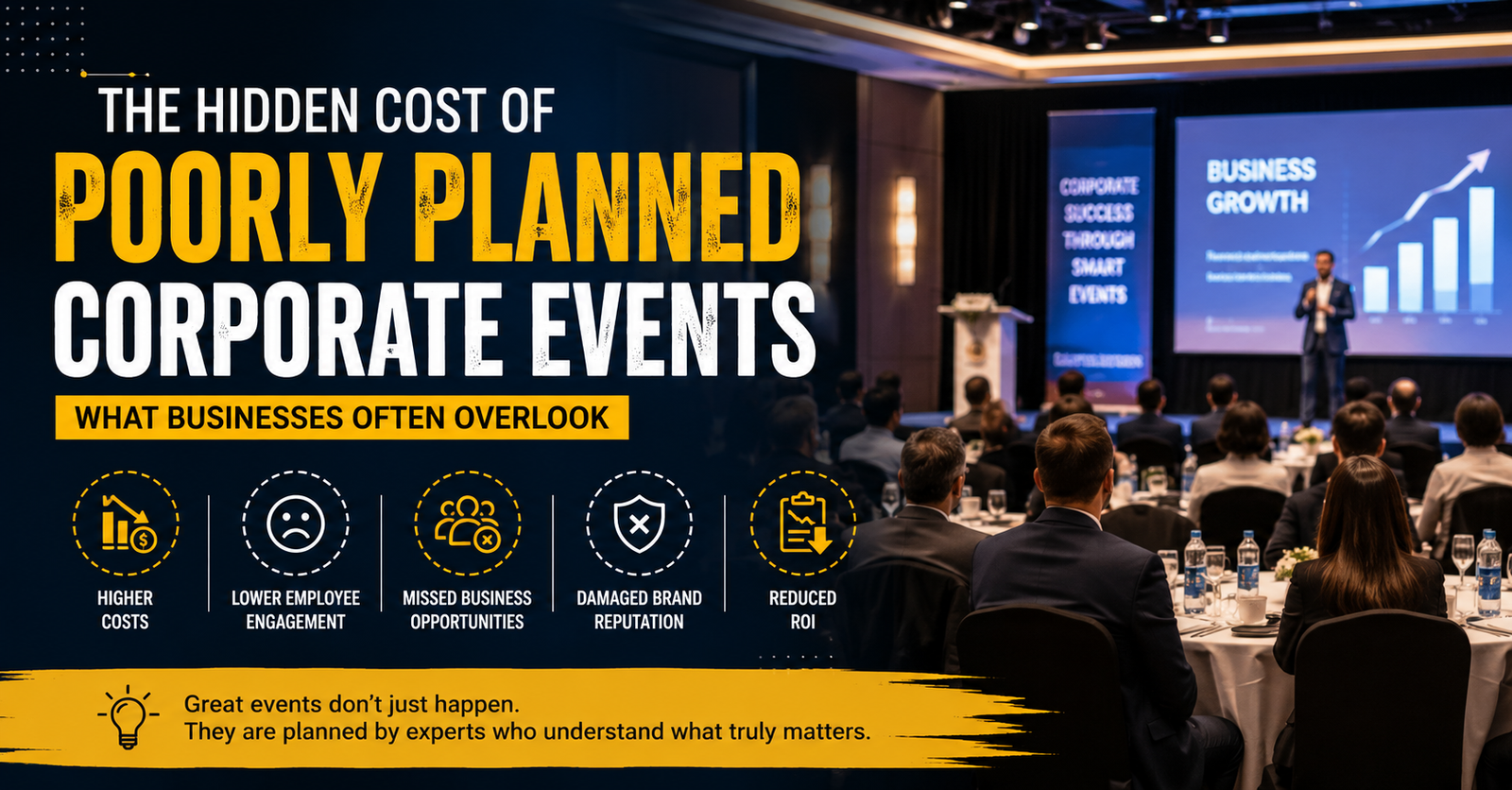
Why Corporate Events Fail is a question many businesses ask after investing significant time, effort, and resources into an event that fails to deliver expected results. Corporate events are powerful tools for strengthening business relationships, improving employee engagement, enhancing brand visibility, and driving organizational growth. However, many organizations focus only on visible event expenses such as venue bookings, catering, and logistics while overlooking the hidden costs that arise from poor planning and execution. A poorly organized corporate event can impact employee morale, client relationships, brand reputation, and overall business performance. Understanding these hidden costs can help organizations make informed decisions, improve event outcomes, and maximize the return on their event investments. Why Corporate Events Matter More Than Ever In today’s competitive business environment, corporate events have evolved beyond simple gatherings. They play a crucial role in helping organizations: Strengthen employee engagement and morale Build meaningful client relationships Increase brand awareness Generate business opportunities Enhance company culture Encourage collaboration and innovation When planned strategically, corporate events create measurable business value. However, poor planning can significantly reduce their effectiveness. The 7 Hidden Costs of Poorly Planned Corporate Events 1. Damage to Brand Reputation Every corporate event reflects your organization’s professionalism and credibility. Issues such as registration delays, technical failures, poor venue management, or ineffective communication can create negative impressions among attendees. Clients, partners, and stakeholders often judge a company based on the quality of its events. A poorly managed event can damage brand perception and undermine years of reputation-building efforts. 2. Reduced Employee Engagement Corporate events are often designed to motivate employees, strengthen workplace culture, and improve team collaboration. However, poor planning can lead to frustration rather than engagement. Common issues include: Disorganized schedules Lack of interactive activities Poor communication Limited employee participation When employees leave an event feeling disengaged, the organization misses a valuable opportunity to improve morale and productivity. 3. Missed Business Opportunities Corporate events frequently serve as platforms for networking, lead generation, partnership development, and client relationship building. If attendees experience logistical challenges or a lack of organization, valuable business opportunities can be lost. Potential clients may leave with a negative impression, reducing the event’s overall effectiveness. 4. Budget Overruns and Unexpected Expenses One of the most common hidden costs of poor event planning is uncontrolled spending. Without proper planning, businesses often encounter: Last-minute vendor charges Emergency equipment rentals Additional staffing expenses Transportation issues Overtime costs Professional planning helps businesses anticipate and manage these costs effectively. 5. Lower Event ROI Every corporate event should contribute toward specific business objectives. Whether the goal is lead generation, employee engagement, brand awareness, or client retention, success should be measurable. Poor planning often results in: Low attendance rates Reduced audience engagement Missed networking opportunities Failure to achieve business goals This significantly reduces the return on investment (ROI) of the event. 6. Increased Pressure on Internal Teams Many businesses rely on employees to manage events alongside their regular responsibilities. This often leads to: Reduced productivity Burnout Missed deadlines Higher workplace stress Internal teams may struggle to manage vendors, registrations, logistics, and attendee communication while maintaining their day-to-day responsibilities. 7. Poor Attendee Experience Attendee satisfaction is one of the strongest indicators of event success. Poor planning can create: Long waiting times Confusing schedules Technical disruptions Poor venue management Limited networking opportunities A negative attendee experience can reduce future participation and impact overall event outcomes. Comparison: Poorly Planned Events vs Professionally Managed Events Poorly Planned Event Professionally Managed Event Budget overruns Controlled spending Vendor coordination issues Seamless vendor management Low attendee engagement High attendee satisfaction Technical disruptions Contingency planning in place Reduced ROI Measurable business outcomes Negative brand perception Professional brand representation Real-World Scenario: The Cost of Poor Planning Imagine a company hosting its annual client appreciation event. Due to poor planning, attendee registration takes longer than expected, presentations begin late because of technical issues, and catering services are delayed. While these problems may seem minor individually, together they create a negative experience that affects client satisfaction, networking opportunities, and overall brand perception. The visible expenses remain the same, but the hidden costs can significantly impact future business relationships and event success. How Professional Event Management Reduces Risk Partnering with an experienced corporate event management company helps businesses avoid common planning challenges and improve event outcomes. Strategic Planning Clear timelines, objectives, and execution plans ensure events run smoothly. Vendor Management Professional planners coordinate venues, suppliers, technical teams, and service providers efficiently. Budget Control Experienced event managers help businesses maximize value while avoiding unnecessary expenses. Risk Management Contingency planning minimizes disruptions and ensures operational continuity. Enhanced Attendee Experience Professional execution creates memorable experiences that support business objectives. Frequently Asked Questions What is the biggest hidden cost of a poorly planned corporate event? Reputational damage is often the most significant hidden cost because it can affect employee morale, client relationships, and brand perception. How can businesses improve event ROI? Businesses can improve ROI by setting clear objectives, tracking performance metrics, engaging attendees effectively, and ensuring professional event execution. Why do corporate events fail? Corporate events commonly fail due to poor planning, lack of communication, unclear objectives, inadequate budgeting, and ineffective coordination. Should businesses hire a corporate event management company? For medium to large-scale events, professional event management can reduce risk, improve attendee experiences, and help achieve measurable business outcomes. Related Articles How to Choose the Right Event Management Company in Pune Corporate Event Planning Checklist for Businesses in Pune Corporate Event Management Company vs In-House Event Planning: Which Is Better? 7 Corporate Events Every Growing Business in Pune Should Organize for Long-Term Success Conclusion Corporate events represent significant investments of time, resources, and effort. While visible event expenses are easy to identify, the hidden costs of poor planning can have a much greater impact on business performance. From damaged brand reputation and reduced employee engagement to missed business opportunities and lower event ROI, poor event execution can create long-term challenges. By investing in strategic planning and professional event management, businesses can deliver successful corporate events that create
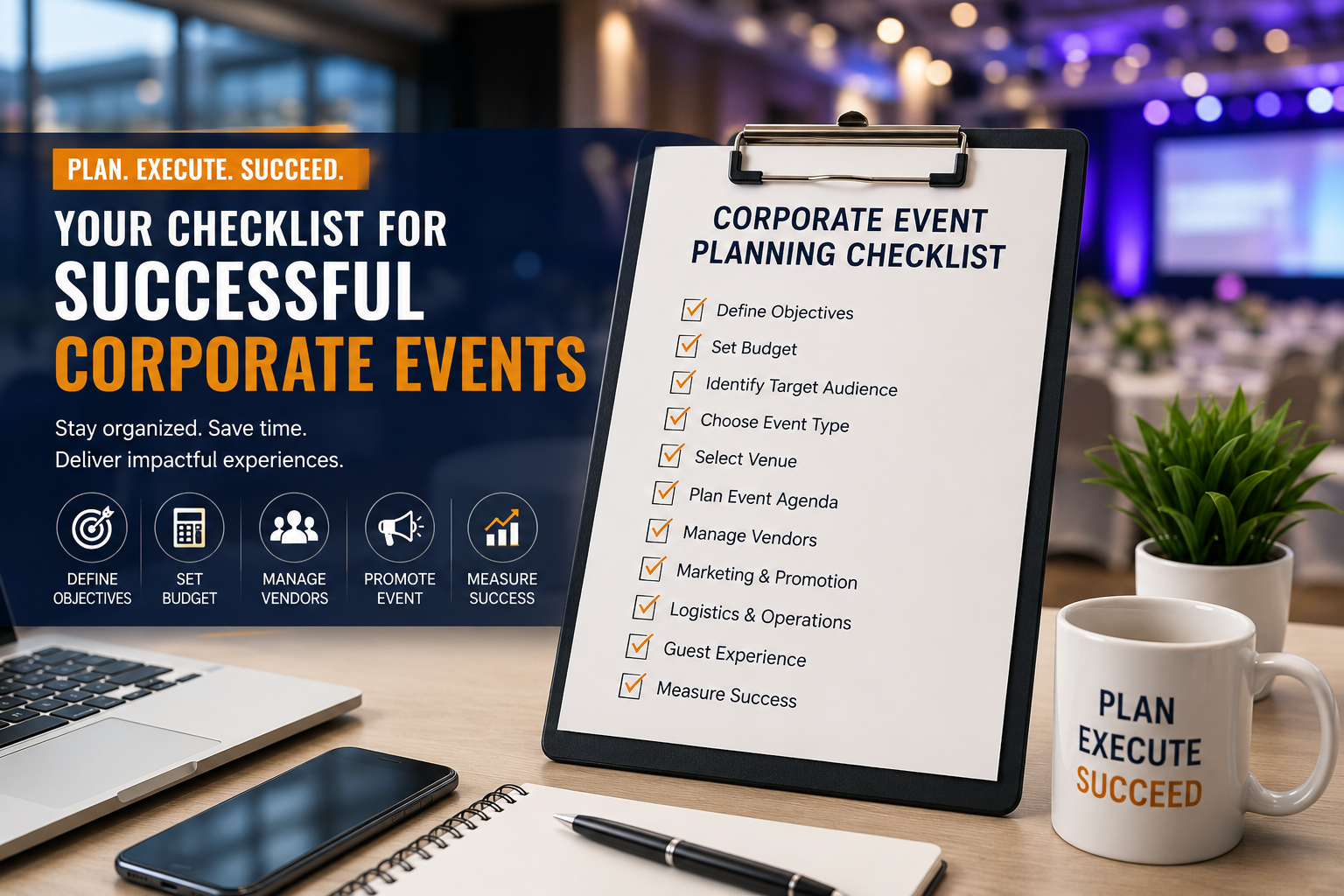
Corporate events have become an essential part of modern business growth. Whether you’re organizing a product launch, annual conference, employee engagement program, networking event, or client appreciation gathering, successful execution requires careful planning and attention to detail. For businesses in Pune, corporate events offer opportunities to strengthen relationships, build brand visibility, generate qualified leads, and improve employee engagement. However, even the most promising event ideas can fall short without a structured planning process. This Corporate Event Planning Checklist Pune will help businesses organize impactful events while avoiding common mistakes that can affect attendance, engagement, and overall event success. Why Corporate Event Planning Matters A well-planned corporate event can help businesses generate new opportunities, strengthen client relationships, improve employee engagement, increase brand visibility, and create meaningful experiences that support long-term business growth. Whether you’re hosting a small networking session or a large-scale conference, having a clear strategy significantly improves the chances of achieving your objectives. Businesses looking for inspiration can explore these corporate events for business growth to understand which event formats align best with their goals. 1. Define Your Event Goals and Objectives Before selecting a venue or sending invitations, identify the purpose of the event. Understanding your goals helps shape every aspect of planning and execution. Lead generation and business development Brand awareness and visibility Employee engagement and team building Product or service launches Customer relationship building Partner and stakeholder networking Clearly defined objectives help determine event formats, target audiences, budgets, and success metrics. Quick Checklist ✔ Define business objectives ✔ Identify target outcomes ✔ Set measurable KPIs ✔ Align event goals with business strategy 2. Set a Realistic Event Budget Budget planning is one of the most important stages of event management. Establishing a realistic budget helps control costs while ensuring the event delivers value. Common event expenses include: Venue rental Catering services Audio-visual equipment Event branding and signage Photography and videography Marketing and promotions Entertainment and guest speakers Registration and event technology Transportation and logistics Budget Planning Checklist ✔ Estimate total event budget ✔ Allocate funds by category ✔ Include contingency expenses ✔ Monitor spending regularly 3. Identify Your Target Audience Understanding who will attend your event allows you to create a more relevant and engaging experience. Your audience may include: Existing customers Prospective clients Employees Industry professionals Investors Business partners Media representatives The better you understand your audience, the more effectively you can plan content, communication, and engagement activities. 4. Choose the Right Type of Corporate Event Different event formats serve different business objectives. Choosing the right format is critical to event success. Product Launch Events Business Conferences Corporate Networking Events Team-Building Activities Annual Meetings Award Ceremonies Training Workshops Corporate Celebrations If you’re exploring event formats, you may also find our guide on corporate event ideas helpful when planning future business events. 5. Select the Ideal Venue The venue influences attendee experience, logistics, accessibility, and overall event perception. Venue Selection Checklist ✔ Convenient location ✔ Adequate parking facilities ✔ Suitable seating capacity ✔ Audio-visual infrastructure ✔ High-speed internet access ✔ Accessibility for attendees ✔ Catering facilities ✔ Branding opportunities Choosing the right venue creates a professional atmosphere and supports a seamless event experience. 6. Create a Detailed Event Timeline A structured timeline ensures every activity is completed on schedule. 8–12 Weeks Before the Event Finalize event objectives Approve budget Book venue Select vendors 4–6 Weeks Before the Event Launch event promotions Send invitations Confirm speakers and presenters Open registrations 2 Weeks Before the Event Finalize attendee list Confirm logistics Conduct technical testing Event Day Coordinate vendors Manage guest experience Monitor event execution Post-Event Activities Collect feedback Share event highlights Evaluate performance metrics 7. Develop an Event Marketing Strategy Even the most well-planned event requires effective promotion to maximize attendance and engagement. Popular event marketing channels include: Email marketing campaigns LinkedIn promotions Social media marketing Paid advertising campaigns Website landing pages Partner outreach Public relations activities Consistent communication before the event helps build anticipation and improve participation rates. 8. Manage Vendors and Event Logistics Corporate events often require coordination between multiple vendors and service providers. Common event vendors include: Caterers Decorators Audio-visual providers Photographers Videographers Entertainment partners Printing vendors Vendor Management Checklist ✔ Confirm contracts and agreements ✔ Share timelines and schedules ✔ Assign responsibilities ✔ Conduct pre-event reviews ✔ Establish communication channels 9. Planning a Product Launch Event? Follow This Additional Checklist Product launches require additional planning to create excitement, attract attention, and generate business opportunities. Product Launch Checklist ✔ Define launch objectives ✔ Prepare product demonstrations ✔ Invite media representatives ✔ Engage industry influencers ✔ Create launch presentations ✔ Capture attendee information ✔ Plan post-launch follow-ups Businesses launching new products often benefit from working with a professional product launch event planning company to ensure smooth execution and stronger audience engagement. 10. Decide Between In-House Planning and Professional Event Management Many organizations debate whether to manage events internally or partner with experienced event professionals. In-House Planning Greater internal control Direct communication Potentially lower upfront costs Challenges of In-House Planning Time-intensive Resource constraints Limited vendor relationships Increased operational workload Benefits of Professional Event Management Industry expertise Vendor management support Better event execution Reduced operational stress Enhanced attendee experience 11. Focus on Guest Experience Attendee experience plays a major role in determining the overall success of an event. Guest Experience Checklist ✔ Easy registration process ✔ Professional welcome experience ✔ Clear communication ✔ Comfortable seating arrangements ✔ Networking opportunities ✔ Quality refreshments ✔ Feedback collection Positive guest experiences encourage stronger relationships and improve participation in future events. 12. Measure Event Success Evaluating event performance helps determine whether your objectives were achieved and provides valuable insights for future improvements. Key Performance Indicators (KPIs) Attendance rate Leads generated Customer inquiries Social media engagement Website traffic Participant feedback Revenue opportunities Return on investment (ROI) Why Businesses Work with a Corporate Event Management Company in Pune Planning a successful corporate event involves managing multiple moving parts simultaneously. From venue selection and vendor coordination to branding, logistics, guest management, and event execution,
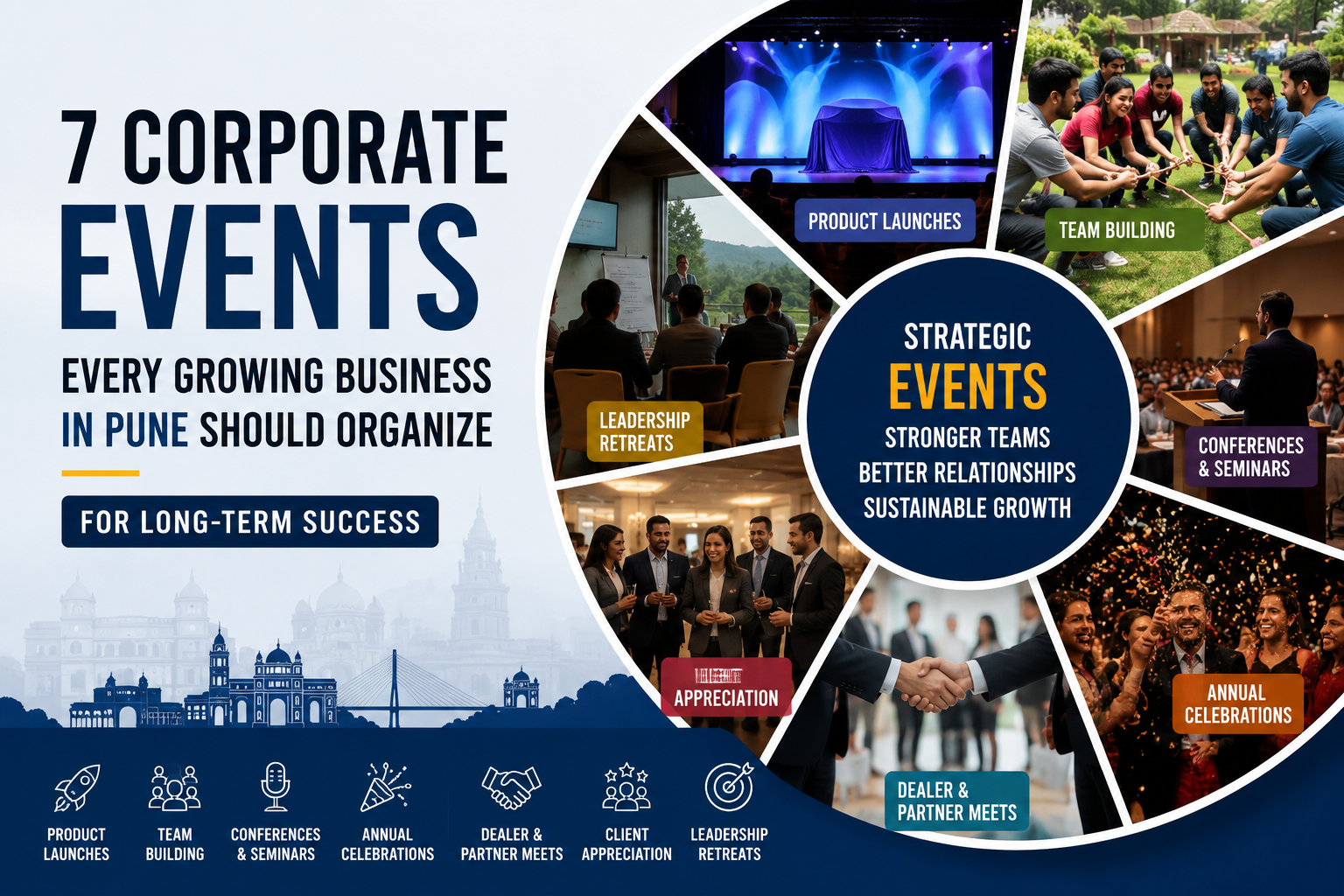
Growing a business requires much more than offering quality products or services. Organizations must continuously invest in employee engagement, customer relationships, brand visibility, and professional networking to remain competitive. This is where corporate events play a vital role. When planned strategically, they help businesses strengthen relationships, create memorable experiences, and support long-term growth objectives. Pune has established itself as one of India’s leading business hubs, attracting startups, IT companies, manufacturing firms, educational institutions, and multinational organizations. As competition continues to increase across industries, businesses are exploring new ways to engage employees, connect with customers, and strengthen their brand presence. Corporate events provide an effective platform to achieve these goals while creating opportunities for collaboration, innovation, and business development. However, not all events deliver the same value. The most successful organizations choose event formats that align with specific business objectives. Whether the goal is launching a new product, rewarding employees, building customer loyalty, or strengthening partnerships, selecting the right type of event can make a significant difference. Over the years, many businesses have shifted from viewing corporate events as one-time celebrations to treating them as strategic business initiatives. Organizations that define clear objectives before planning an event typically achieve stronger engagement, better participation, and more measurable outcomes. In this guide, we’ll explore seven corporate events every growing business should consider and how each contributes to long-term business success. 1. Product Launch Events A product launch is often one of the most important milestones in a company’s growth journey. A successful launch creates awareness, generates excitement, attracts media attention, and helps establish a strong market presence from the very beginning. A product launch event provides businesses with an opportunity to showcase product features, communicate value propositions, and engage directly with customers, partners, distributors, and stakeholders. Unlike traditional marketing campaigns, launch events create interactive experiences that help audiences connect with the brand and understand the product’s benefits firsthand. Benefits of Product Launch Events Create awareness before market entry Generate media coverage and publicity Increase customer engagement Support lead generation efforts Strengthen brand positioning Build confidence among investors and stakeholders A successful launch requires careful planning, audience management, branding, logistics, and execution. For this reason, many organizations prefer working with a product launch event management company in Pune to ensure a seamless and impactful launch experience. 2. Team-Building Events As businesses expand, collaboration between departments becomes increasingly important. Teams often become focused on individual responsibilities, which can create communication gaps and reduce workplace engagement. Team-building events help employees connect outside their daily work environment. These activities encourage collaboration, strengthen relationships, and create opportunities for employees to develop trust and mutual understanding. Modern team-building programs can include outdoor adventures, leadership challenges, collaborative workshops, problem-solving exercises, and employee engagement activities designed to improve communication and teamwork. Why Team-Building Matters Improves communication across teams Encourages collaboration Strengthens workplace relationships Boosts employee morale Enhances company culture Supports employee retention Organizations that invest in team-building often create stronger workplace cultures and more engaged employees. Research from Gallup has consistently shown that highly engaged teams tend to demonstrate stronger productivity, higher retention rates, and better overall business performance. 3. Corporate Conferences and Seminars Conferences and seminars provide valuable opportunities for businesses to share knowledge, discuss industry developments, and establish authority within their sector. These events bring together professionals, industry experts, customers, and stakeholders to exchange ideas and learn about emerging trends. They also create networking opportunities that can lead to partnerships, collaborations, and new business opportunities. Common Objectives of Conferences and Seminars Industry education Thought leadership Professional networking Knowledge sharing Lead generation Brand awareness Hosting a successful conference demonstrates expertise while helping organizations position themselves as trusted industry leaders. 4. Annual Corporate Celebrations Annual celebrations are an important part of employee recognition and organizational culture. These events provide businesses with an opportunity to celebrate achievements, recognize employee contributions, and strengthen team spirit. Whether it’s an annual day celebration, company anniversary, festive event, awards ceremony, or milestone celebration, these gatherings create positive experiences that reinforce organizational values. Benefits of Annual Corporate Celebrations Improve employee satisfaction Recognize achievements Strengthen company culture Increase employee engagement Support employee retention Encourage team bonding Employees who feel appreciated and recognized are often more motivated and committed to organizational goals. 5. Dealer and Channel Partner Meets For businesses that rely on dealers, distributors, franchisees, or channel partners, maintaining strong professional relationships is essential for long-term success. Dealer and channel partner meets provide a platform to discuss business goals, share future strategies, recognize top-performing partners, and gather valuable market feedback. Key Benefits Strengthen business relationships Improve communication Increase partner loyalty Share company updates Discuss growth opportunities Collect industry insights Strong partnerships often contribute directly to business growth. Dealer meets help ensure alignment between organizations and their partners while creating opportunities for collaboration and mutual success. 6. Client Appreciation Events Customer retention is often more cost-effective than customer acquisition. While attracting new customers remains important, nurturing existing relationships is equally valuable. Client appreciation events allow businesses to express gratitude, strengthen trust, and create memorable experiences for their customers. These events can include networking dinners, customer appreciation programs, milestone celebrations, exclusive previews, and relationship-building experiences. Why Client Appreciation Events Matter Strengthen customer relationships Improve retention rates Encourage referrals Increase customer loyalty Enhance brand perception Build long-term trust Organizations that prioritize customer relationships often enjoy stronger brand loyalty and increased customer lifetime value. 7. Leadership Retreats and Strategy Meetings As organizations expand, leadership teams require dedicated time to evaluate performance, identify opportunities, and align future goals. Leadership retreats provide an environment where executives can focus on strategic planning without the distractions of daily operations. These events encourage collaboration among decision-makers while supporting innovation and long-term planning. Outcomes of Leadership Retreats Better organizational alignment Improved decision-making Enhanced leadership collaboration Clear business objectives Increased innovation Stronger strategic planning Leadership retreats also provide opportunities to evaluate market trends, address operational challenges, and develop actionable growth strategies. By stepping away from day-to-day responsibilities, leaders can focus on long-term priorities that contribute to sustainable business
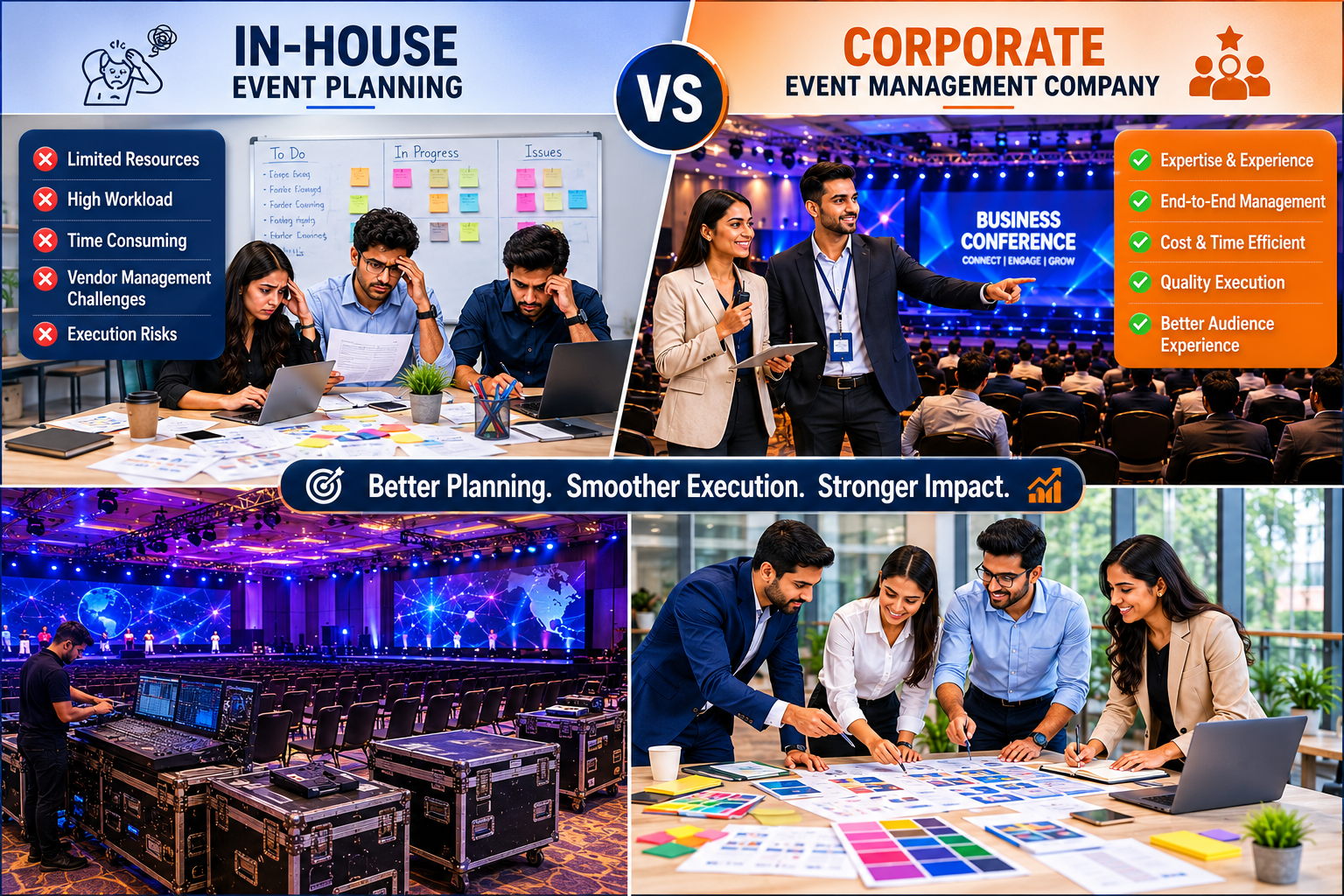
Many businesses assume that managing a corporate event internally will save money and offer better control over execution. In reality, tight deadlines, vendor delays, technical challenges, and coordination issues can quickly overwhelm internal teams and affect the overall event experience. From annual meetings and leadership conferences to product launches and employee engagement programs, modern business events are no longer just formal gatherings. They are strategic opportunities to strengthen brand positioning, improve employee engagement, build industry relationships, and create meaningful audience experiences. As audience expectations continue to evolve, many organizations now prefer working with a professional corporate event management company to ensure smoother planning, stronger brand presentation, and seamless on-ground execution. This shift has created an important question for many organizations: should events be handled internally by HR or marketing teams, or is outsourcing to experienced professionals the smarter long-term decision? The answer depends on several factors including event scale, audience expectations, technical requirements, internal bandwidth, budget control, and business goals. In fast-growing business hubs like Pune, where startups, IT firms, manufacturing companies, and enterprise brands regularly organize conferences, networking events, exhibitions, and corporate celebrations, businesses are carefully evaluating which approach delivers better efficiency, scalability, and event impact. This article explores the real differences between in-house event planning and professional event execution, helping businesses understand which approach works best based on operational needs, event complexity, and expected outcomes. Why Corporate Events Have Become More Complex Corporate events today are significantly different from what they were a few years ago. Businesses are no longer organizing events simply to complete formalities or host internal gatherings. Modern corporate events are now closely connected to brand perception, employee experience, client relationships, networking opportunities, and business growth. As audience expectations continue to evolve, companies are expected to deliver events that feel organized, engaging, technically smooth, and professionally executed from start to finish. This growing expectation has made corporate event planning far more complex than traditional event coordination. Audience Expectations Have Changed Attendees today expect more than basic presentations and conference setups. Whether it is a corporate seminar, product launch, annual meeting, or networking event, audiences now look for interactive experiences, professional production quality, seamless communication, and engaging event formats. Poorly managed events often lead to: Low attendee engagement Weak brand perception Reduced audience participation Negative employee experiences Operational confusion during execution For businesses, this creates additional pressure to ensure every aspect of the event is properly planned and professionally managed. Technology Has Become a Major Part of Events Modern corporate events heavily depend on technical infrastructure. Events today often include: LED walls and stage production Live streaming and hybrid event setups Presentation systems Digital registrations Event branding displays Interactive audience engagement tools Professional sound and lighting systems Even small technical failures during live events can negatively impact attendee experience and business credibility. According to Professional Convention Management Association (PCMA), businesses are increasingly focusing on experience-driven events that improve engagement, networking, and audience interaction. Corporate Events Now Directly Influence Brand Image For many companies, corporate events are no longer isolated activities. They are now part of broader marketing, branding, employee engagement, and business communication strategies. A well-executed event can strengthen: Business credibility Client relationships Employee morale Industry positioning Brand visibility On the other hand, poor execution can damage audience trust and reduce the overall effectiveness of the event. Internal Teams Often Face Operational Overload One of the most overlooked challenges in corporate event planning is internal workload management. In many organizations, HR teams, marketing departments, or administrative staff are expected to manage events alongside their regular responsibilities. As event complexity increases, internal teams often struggle with: Vendor coordination Timeline management Technical supervision Guest communication Last-minute operational issues Budget tracking This is one of the key reasons why businesses are increasingly evaluating whether professional corporate event management companies can deliver better execution efficiency compared to in-house event planning. What Is In-House Event Planning? In-house event planning refers to managing corporate events internally using existing company teams instead of hiring an external corporate event management company. In most organizations, responsibilities related to event planning are usually handled by HR teams, marketing departments, administration staff, or internal communication teams depending on the type of event being organized. This approach is commonly used for: Internal meetings Small employee engagement activities Team celebrations Training sessions Office gatherings Department-level events Many businesses initially prefer in-house event planning because it appears more cost-effective and gives internal teams direct control over decision-making and coordination. Why Some Businesses Prefer In-House Event Planning For smaller events with limited operational requirements, in-house planning can sometimes work efficiently, especially when businesses already have strong internal coordination systems. Some companies choose internal event planning because: Internal teams understand company culture closely Communication between departments becomes easier Approvals and decision-making may happen faster Small events may not require large production setups Businesses want direct control over budgets For routine internal events, businesses may feel more comfortable managing operations themselves instead of involving external agencies. The Hidden Challenges of Internal Event Management While in-house event planning may appear manageable initially, many businesses underestimate the operational complexity involved in executing professional corporate events successfully. Corporate event planning involves far more than venue booking and scheduling. Internal teams are often required to simultaneously manage: Vendor coordination Production timelines Technical arrangements Guest communication Registration management Stage setup Hospitality coordination Budget tracking Last-minute troubleshooting As event size increases, these responsibilities can quickly become difficult to manage alongside regular business operations. Internal Workload Often Becomes a Major Problem One of the biggest issues businesses face with in-house event planning is internal workload pressure. In many companies, employees handling events already have full-time operational responsibilities. Managing a large conference, annual event, product launch, or exhibition in addition to daily work can create significant stress and reduce overall execution quality. This often leads to: Missed deadlines Communication gaps Vendor confusion Poor attendee coordination Technical oversight issues Lower audience engagement For businesses organizing high-visibility corporate events, these operational challenges can directly affect brand perception and attendee experience. In-House Planning