
Growing a business requires much more than offering quality products or services. Organizations must continuously invest in employee engagement, customer relationships, brand visibility, and professional networking to remain competitive. This is where corporate events play a vital role. When planned strategically, they help businesses strengthen relationships, create memorable experiences, and support long-term growth objectives.
Pune has established itself as one of India’s leading business hubs, attracting startups, IT companies, manufacturing firms, educational institutions, and multinational organizations. As competition continues to increase across industries, businesses are exploring new ways to engage employees, connect with customers, and strengthen their brand presence. Corporate events provide an effective platform to achieve these goals while creating opportunities for collaboration, innovation, and business development.
However, not all events deliver the same value. The most successful organizations choose event formats that align with specific business objectives. Whether the goal is launching a new product, rewarding employees, building customer loyalty, or strengthening partnerships, selecting the right type of event can make a significant difference.
Over the years, many businesses have shifted from viewing corporate events as one-time celebrations to treating them as strategic business initiatives. Organizations that define clear objectives before planning an event typically achieve stronger engagement, better participation, and more measurable outcomes.
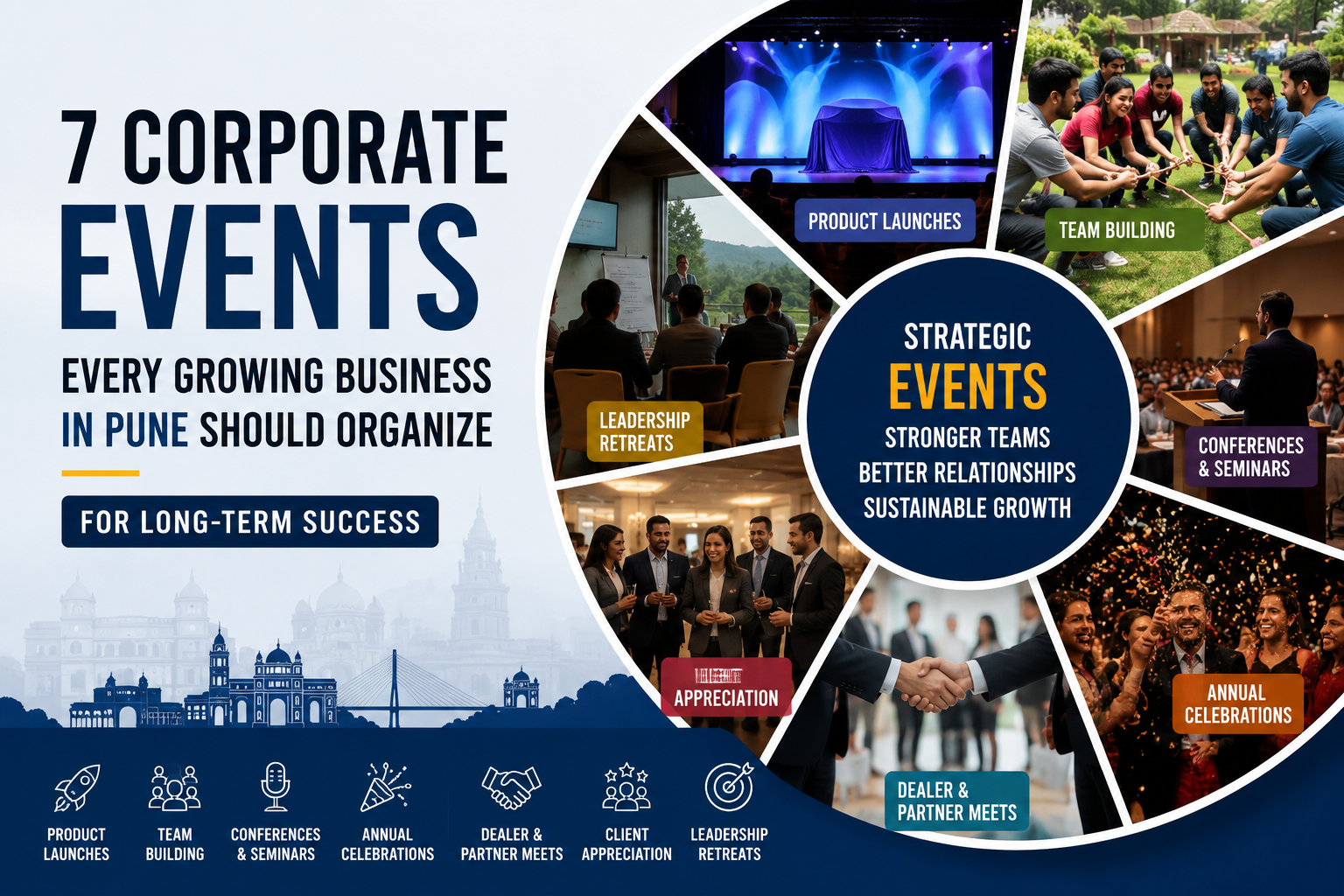
In this guide, we’ll explore seven corporate events every growing business should consider and how each contributes to long-term business success.
1. Product Launch Events
A product launch is often one of the most important milestones in a company’s growth journey. A successful launch creates awareness, generates excitement, attracts media attention, and helps establish a strong market presence from the very beginning.
A product launch event provides businesses with an opportunity to showcase product features, communicate value propositions, and engage directly with customers, partners, distributors, and stakeholders. Unlike traditional marketing campaigns, launch events create interactive experiences that help audiences connect with the brand and understand the product’s benefits firsthand.
Benefits of Product Launch Events
- Create awareness before market entry
- Generate media coverage and publicity
- Increase customer engagement
- Support lead generation efforts
- Strengthen brand positioning
- Build confidence among investors and stakeholders
A successful launch requires careful planning, audience management, branding, logistics, and execution. For this reason, many organizations prefer working with a product launch event management company in Pune to ensure a seamless and impactful launch experience.
2. Team-Building Events
As businesses expand, collaboration between departments becomes increasingly important. Teams often become focused on individual responsibilities, which can create communication gaps and reduce workplace engagement.
Team-building events help employees connect outside their daily work environment. These activities encourage collaboration, strengthen relationships, and create opportunities for employees to develop trust and mutual understanding.
Modern team-building programs can include outdoor adventures, leadership challenges, collaborative workshops, problem-solving exercises, and employee engagement activities designed to improve communication and teamwork.
Why Team-Building Matters
- Improves communication across teams
- Encourages collaboration
- Strengthens workplace relationships
- Boosts employee morale
- Enhances company culture
- Supports employee retention
Organizations that invest in team-building often create stronger workplace cultures and more engaged employees. Research from Gallup has consistently shown that highly engaged teams tend to demonstrate stronger productivity, higher retention rates, and better overall business performance.
3. Corporate Conferences and Seminars
Conferences and seminars provide valuable opportunities for businesses to share knowledge, discuss industry developments, and establish authority within their sector.
These events bring together professionals, industry experts, customers, and stakeholders to exchange ideas and learn about emerging trends. They also create networking opportunities that can lead to partnerships, collaborations, and new business opportunities.
Common Objectives of Conferences and Seminars
- Industry education
- Thought leadership
- Professional networking
- Knowledge sharing
- Lead generation
- Brand awareness
Hosting a successful conference demonstrates expertise while helping organizations position themselves as trusted industry leaders.
4. Annual Corporate Celebrations
Annual celebrations are an important part of employee recognition and organizational culture. These events provide businesses with an opportunity to celebrate achievements, recognize employee contributions, and strengthen team spirit.
Whether it’s an annual day celebration, company anniversary, festive event, awards ceremony, or milestone celebration, these gatherings create positive experiences that reinforce organizational values.
Benefits of Annual Corporate Celebrations
- Improve employee satisfaction
- Recognize achievements
- Strengthen company culture
- Increase employee engagement
- Support employee retention
- Encourage team bonding
Employees who feel appreciated and recognized are often more motivated and committed to organizational goals.
5. Dealer and Channel Partner Meets
For businesses that rely on dealers, distributors, franchisees, or channel partners, maintaining strong professional relationships is essential for long-term success.
Dealer and channel partner meets provide a platform to discuss business goals, share future strategies, recognize top-performing partners, and gather valuable market feedback.
Key Benefits
- Strengthen business relationships
- Improve communication
- Increase partner loyalty
- Share company updates
- Discuss growth opportunities
- Collect industry insights
Strong partnerships often contribute directly to business growth. Dealer meets help ensure alignment between organizations and their partners while creating opportunities for collaboration and mutual success.
6. Client Appreciation Events
Customer retention is often more cost-effective than customer acquisition. While attracting new customers remains important, nurturing existing relationships is equally valuable.
Client appreciation events allow businesses to express gratitude, strengthen trust, and create memorable experiences for their customers. These events can include networking dinners, customer appreciation programs, milestone celebrations, exclusive previews, and relationship-building experiences.
Why Client Appreciation Events Matter
- Strengthen customer relationships
- Improve retention rates
- Encourage referrals
- Increase customer loyalty
- Enhance brand perception
- Build long-term trust
Organizations that prioritize customer relationships often enjoy stronger brand loyalty and increased customer lifetime value.
7. Leadership Retreats and Strategy Meetings
As organizations expand, leadership teams require dedicated time to evaluate performance, identify opportunities, and align future goals.
Leadership retreats provide an environment where executives can focus on strategic planning without the distractions of daily operations. These events encourage collaboration among decision-makers while supporting innovation and long-term planning.
Outcomes of Leadership Retreats
- Better organizational alignment
- Improved decision-making
- Enhanced leadership collaboration
- Clear business objectives
- Increased innovation
- Stronger strategic planning
Leadership retreats also provide opportunities to evaluate market trends, address operational challenges, and develop actionable growth strategies. By stepping away from day-to-day responsibilities, leaders can focus on long-term priorities that contribute to sustainable business success.
Insights published by Harvard Business Review continue to highlight the importance of effective leadership and organizational alignment in achieving long-term business performance.
How Growing Businesses Can Choose the Right Corporate Event
Different events serve different business objectives. Instead of selecting an event format based on trends, organizations should align event choices with specific goals.
| Business Objective | Recommended Event Type |
|---|---|
| Launch a New Product | Product Launch Event |
| Improve Employee Engagement | Team-Building Event |
| Build Industry Authority | Conference or Seminar |
| Recognize Employee Contributions | Annual Corporate Celebration |
| Strengthen Distribution Networks | Dealer Meet |
| Improve Customer Retention | Client Appreciation Event |
| Strategic Business Planning | Leadership Retreat |
How Professional Event Planning Contributes to Event Success
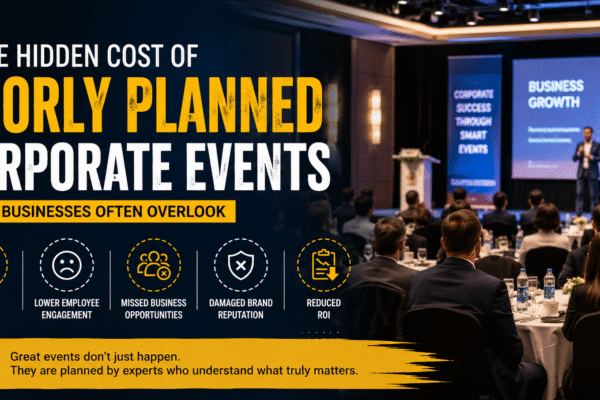
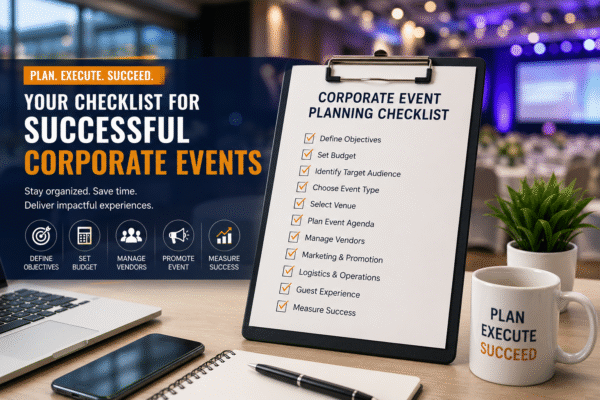
Regardless of the event type, successful execution requires careful planning, coordination, and expertise. Venue selection, branding, logistics, attendee management, technical support, vendor coordination, and contingency planning all play critical roles in event outcomes.
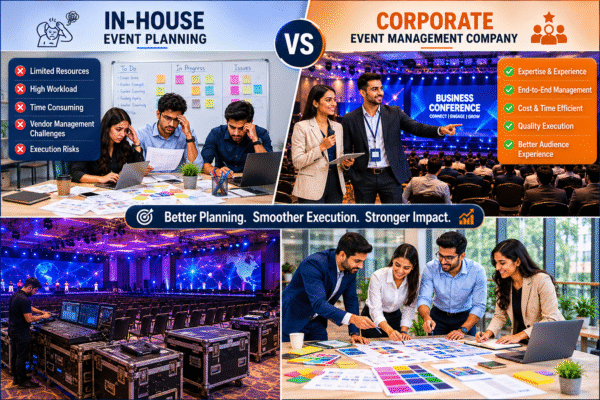
Many businesses initially consider handling events internally. While this may be practical for smaller gatherings, larger and more complex events often require specialized expertise. Understanding the differences between in-house event planning and professional event management can help organizations determine which approach best aligns with their objectives.
Professional event planners bring industry knowledge, established vendor relationships, creative solutions, and operational efficiency. Their experience helps reduce stress while ensuring a smoother and more engaging attendee experience.
How to Measure the Success of a Corporate Event
Many businesses evaluate event success based solely on attendance numbers. However, meaningful measurement requires a broader perspective.
- Employee participation rates
- Customer engagement levels
- Lead generation results
- Partner satisfaction
- Media coverage
- Brand visibility
- Social media engagement
- Attendee feedback
- Return on investment (ROI)
Establishing clear objectives before planning begins makes it easier to evaluate outcomes and identify opportunities for future improvement.
Common Mistakes Businesses Make When Organizing Corporate Events
- Failing to establish clear event objectives
- Choosing venues without considering attendee experience
- Underestimating budgets and logistics
- Prioritizing entertainment over business outcomes
- Starting the planning process too late
- Ignoring attendee feedback after the event
- Overlooking contingency planning
Avoiding these mistakes can significantly improve event effectiveness and contribute to stronger business outcomes.
Choosing the Right Event Management Partner
While event ideas are important, execution ultimately determines success. Experience, creativity, industry knowledge, vendor management capabilities, and operational expertise all influence event outcomes.
Businesses planning conferences, product launches, annual celebrations, dealer meets, or employee engagement programs should carefully evaluate potential event partners before making a decision.
Understanding how to choose the right event management company in Pune can help organizations identify a partner that aligns with their goals, budget, and expectations.
When evaluating event management companies, businesses should consider industry experience, portfolio quality, client testimonials, creative capabilities, vendor networks, and event execution expertise.
Frequently Asked Questions
What are the most popular corporate events for businesses?
Product launches, team-building activities, conferences, annual celebrations, dealer meets, client appreciation events, and leadership retreats are among the most popular corporate events for growing businesses.
Why should businesses hire a corporate event management company?
Professional event management companies bring expertise in planning, logistics, branding, vendor coordination, and audience engagement, helping organizations achieve better event outcomes.
How far in advance should a corporate event be planned?
Smaller events may require only a few weeks of preparation, while larger conferences, annual celebrations, and product launches often require several months of planning.
What is the purpose of a product launch event?
A product launch event introduces a new product to customers, stakeholders, partners, and media representatives while generating awareness and excitement.
How do corporate events contribute to business growth?
Corporate events improve employee engagement, strengthen customer relationships, increase brand visibility, generate leads, and support long-term business growth.
Final Thoughts
Corporate events are no longer optional business activities. They have become strategic tools for improving employee engagement, strengthening customer relationships, enhancing brand visibility, and supporting sustainable growth. From product launches and conferences to client appreciation programs and leadership retreats, each event type serves a unique purpose within an organization’s broader growth strategy. As businesses continue to evolve in competitive markets, strategic event planning will remain an important component of long-term success. Organizations seeking stronger event outcomes often benefit from partnering with the best corporate event management company in Pune to ensure seamless execution, meaningful audience engagement, and measurable business results. Whether your goal is employee engagement, customer acquisition, brand building, or business networking, investing in the right corporate event can create lasting value for your organization.