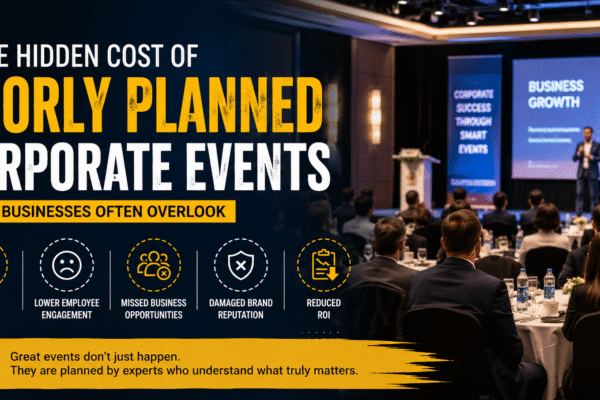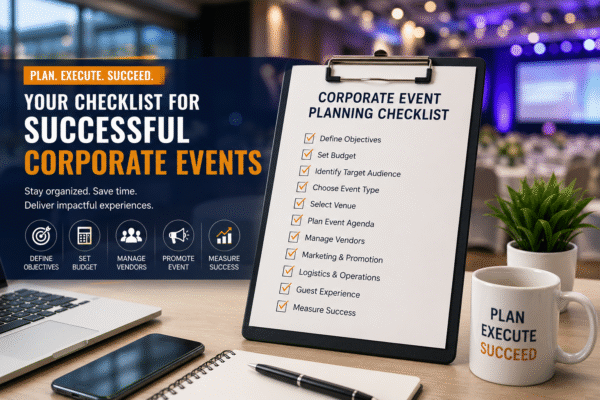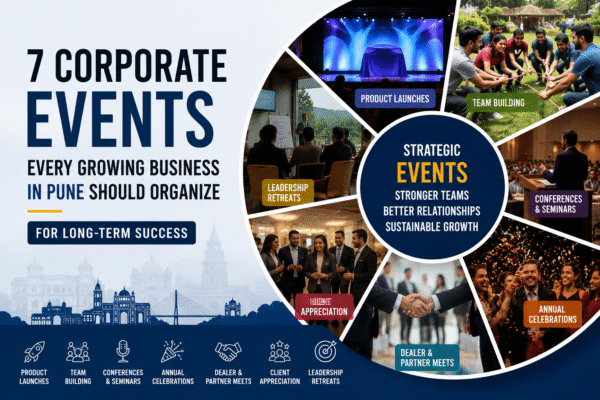

Many businesses assume that managing a corporate event internally will save money and offer better control over execution. In reality, tight deadlines, vendor delays, technical challenges, and coordination issues can quickly overwhelm internal teams and affect the overall event experience.
From annual meetings and leadership conferences to product launches and employee engagement programs, modern business events are no longer just formal gatherings. They are strategic opportunities to strengthen brand positioning, improve employee engagement, build industry relationships, and create meaningful audience experiences.
As audience expectations continue to evolve, many organizations now prefer working with a professional corporate event management company to ensure smoother planning, stronger brand presentation, and seamless on-ground execution.
This shift has created an important question for many organizations: should events be handled internally by HR or marketing teams, or is outsourcing to experienced professionals the smarter long-term decision?
The answer depends on several factors including event scale, audience expectations, technical requirements, internal bandwidth, budget control, and business goals.
In fast-growing business hubs like Pune, where startups, IT firms, manufacturing companies, and enterprise brands regularly organize conferences, networking events, exhibitions, and corporate celebrations, businesses are carefully evaluating which approach delivers better efficiency, scalability, and event impact.
This article explores the real differences between in-house event planning and professional event execution, helping businesses understand which approach works best based on operational needs, event complexity, and expected outcomes.
Why Corporate Events Have Become More Complex
Corporate events today are significantly different from what they were a few years ago. Businesses are no longer organizing events simply to complete formalities or host internal gatherings. Modern corporate events are now closely connected to brand perception, employee experience, client relationships, networking opportunities, and business growth.
As audience expectations continue to evolve, companies are expected to deliver events that feel organized, engaging, technically smooth, and professionally executed from start to finish.
This growing expectation has made corporate event planning far more complex than traditional event coordination.
Audience Expectations Have Changed
Attendees today expect more than basic presentations and conference setups. Whether it is a corporate seminar, product launch, annual meeting, or networking event, audiences now look for interactive experiences, professional production quality, seamless communication, and engaging event formats.
Poorly managed events often lead to:
- Low attendee engagement
- Weak brand perception
- Reduced audience participation
- Negative employee experiences
- Operational confusion during execution
For businesses, this creates additional pressure to ensure every aspect of the event is properly planned and professionally managed.
Technology Has Become a Major Part of Events
Modern corporate events heavily depend on technical infrastructure. Events today often include:
- LED walls and stage production
- Live streaming and hybrid event setups
- Presentation systems
- Digital registrations
- Event branding displays
- Interactive audience engagement tools
- Professional sound and lighting systems
Even small technical failures during live events can negatively impact attendee experience and business credibility.
According to Professional Convention Management Association (PCMA), businesses are increasingly focusing on experience-driven events that improve engagement, networking, and audience interaction.
Corporate Events Now Directly Influence Brand Image
For many companies, corporate events are no longer isolated activities. They are now part of broader marketing, branding, employee engagement, and business communication strategies.
A well-executed event can strengthen:
- Business credibility
- Client relationships
- Employee morale
- Industry positioning
- Brand visibility
On the other hand, poor execution can damage audience trust and reduce the overall effectiveness of the event.
Internal Teams Often Face Operational Overload
One of the most overlooked challenges in corporate event planning is internal workload management. In many organizations, HR teams, marketing departments, or administrative staff are expected to manage events alongside their regular responsibilities.
As event complexity increases, internal teams often struggle with:
- Vendor coordination
- Timeline management
- Technical supervision
- Guest communication
- Last-minute operational issues
- Budget tracking
This is one of the key reasons why businesses are increasingly evaluating whether professional corporate event management companies can deliver better execution efficiency compared to in-house event planning.
What Is In-House Event Planning?
In-house event planning refers to managing corporate events internally using existing company teams instead of hiring an external corporate event management company.
In most organizations, responsibilities related to event planning are usually handled by HR teams, marketing departments, administration staff, or internal communication teams depending on the type of event being organized.
This approach is commonly used for:
- Internal meetings
- Small employee engagement activities
- Team celebrations
- Training sessions
- Office gatherings
- Department-level events
Many businesses initially prefer in-house event planning because it appears more cost-effective and gives internal teams direct control over decision-making and coordination.
Why Some Businesses Prefer In-House Event Planning
For smaller events with limited operational requirements, in-house planning can sometimes work efficiently, especially when businesses already have strong internal coordination systems.
Some companies choose internal event planning because:
- Internal teams understand company culture closely
- Communication between departments becomes easier
- Approvals and decision-making may happen faster
- Small events may not require large production setups
- Businesses want direct control over budgets
For routine internal events, businesses may feel more comfortable managing operations themselves instead of involving external agencies.
The Hidden Challenges of Internal Event Management
While in-house event planning may appear manageable initially, many businesses underestimate the operational complexity involved in executing professional corporate events successfully.
Corporate event planning involves far more than venue booking and scheduling.
Internal teams are often required to simultaneously manage:
- Vendor coordination
- Production timelines
- Technical arrangements
- Guest communication
- Registration management
- Stage setup
- Hospitality coordination
- Budget tracking
- Last-minute troubleshooting
As event size increases, these responsibilities can quickly become difficult to manage alongside regular business operations.
Internal Workload Often Becomes a Major Problem
One of the biggest issues businesses face with in-house event planning is internal workload pressure.
In many companies, employees handling events already have full-time operational responsibilities. Managing a large conference, annual event, product launch, or exhibition in addition to daily work can create significant stress and reduce overall execution quality.
This often leads to:
- Missed deadlines
- Communication gaps
- Vendor confusion
- Poor attendee coordination
- Technical oversight issues
- Lower audience engagement
For businesses organizing high-visibility corporate events, these operational challenges can directly affect brand perception and attendee experience.
In-House Planning Works Best in Limited Scenarios
Internal event planning is usually more suitable when:
- The event is small in scale
- Technical production requirements are minimal
- Guest management is limited
- The event involves only internal employees
- Execution complexity is low
However, as corporate events become larger, more experience-driven, and technically demanding, businesses often begin evaluating whether professional event management support can improve execution quality and reduce operational pressure on internal teams.
What Does a Corporate Event Management Company Handle?
A corporate event management company is responsible for planning, coordinating, and executing business events professionally from start to finish. Unlike in-house event planning, where responsibilities are divided across internal teams, professional event management companies operate with dedicated specialists who focus entirely on event execution, audience experience, logistics, and production management.
Their role goes far beyond organizing venues or coordinating schedules. Modern corporate event management involves strategic planning, technical execution, branding, vendor management, audience engagement, and operational problem-solving throughout the event lifecycle.
Strategic Event Planning
Professional event management companies usually begin by understanding the purpose and business objective behind the event.
This may include:
- Brand visibility goals
- Employee engagement objectives
- Client networking opportunities
- Product launch positioning
- Conference audience expectations
- Business communication requirements
Instead of treating events as isolated activities, experienced event planners align event execution with overall business goals and audience expectations.
Vendor Coordination & Logistics Management
One of the most time-consuming aspects of corporate event planning is managing multiple vendors simultaneously.
Corporate event management companies typically coordinate:
- Venue partners
- Production teams
- Decor vendors
- Catering services
- Photographers and videographers
- Technical support teams
- Artist and entertainment coordination
- Transportation and hospitality vendors
Because professional event companies already work with established vendor networks, businesses often benefit from smoother coordination, faster execution, and better operational efficiency.
Technical Production Management
Modern corporate events heavily depend on technical production quality. Even well-planned events can fail if production execution is weak.
Professional event management companies generally supervise:
- LED wall setup
- Audio systems
- Lighting design
- Live streaming support
- Hybrid event technology
- Presentation management
- Stage production
- Power backup coordination
This technical oversight becomes especially important during conferences, annual meetings, product launches, and high-profile business events where audience experience directly affects brand perception.
Audience Experience & Engagement
One of the biggest differences between basic event coordination and professional event management is audience experience planning.
Professional corporate event planners focus not only on logistics but also on how attendees interact with the event environment.
This may include:
- Registration flow management
- Guest hospitality
- Interactive engagement activities
- Networking experiences
- Stage presentation flow
- Audience communication
- Experience-driven event design
As businesses increasingly prioritize experiential branding, audience engagement has become a major focus area in modern corporate events.
Crisis Management & Problem Solving
Unexpected challenges are common during live events. Vendor delays, technical failures, scheduling disruptions, and last-minute operational changes can occur even in well-planned setups.
Experienced corporate event management companies are usually better equipped to handle such situations because they operate with dedicated execution teams, backup coordination systems, and on-ground event supervision experience.
This reduces operational pressure on internal business teams during critical events.
Scalability for Large Corporate Events
As event size increases, execution complexity also increases significantly.
Professional event management companies are generally more capable of handling:
- Large conferences
- Multi-day events
- Corporate exhibitions
- Product launches
- Award ceremonies
- High-attendance networking events
- Corporate offsite programs
This scalability becomes difficult for many internal teams to manage without dedicated event expertise and operational support.
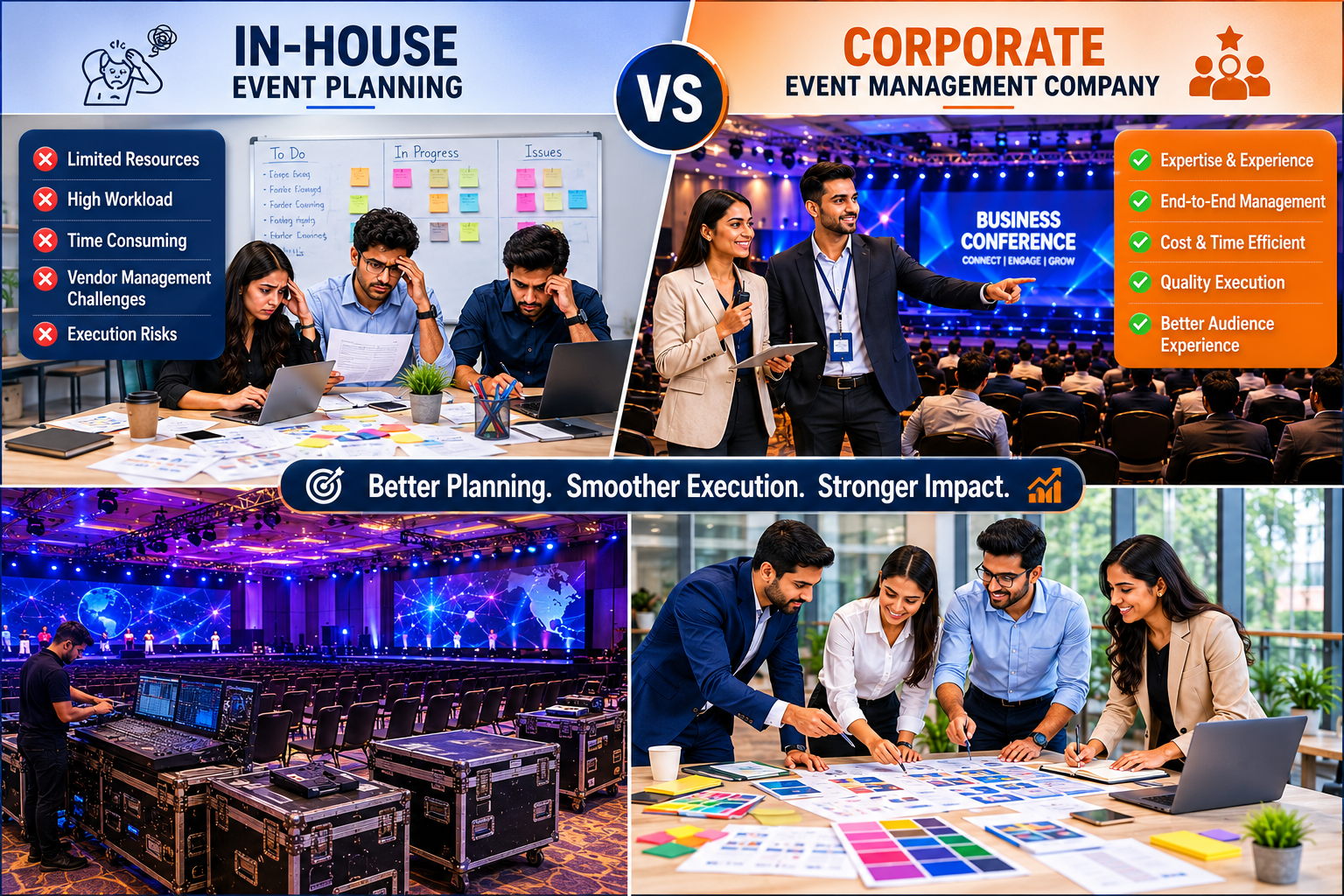
Corporate Event Management Company vs In-House Event Planning
Choosing between in-house event planning and hiring a corporate event management company depends on several practical factors including event scale, internal resources, technical requirements, audience expectations, and execution complexity.
While some businesses prefer handling smaller events internally, larger corporate events often require dedicated planning expertise, production management, and operational coordination that internal teams may struggle to manage efficiently alongside regular responsibilities.
Understanding the differences between both approaches helps businesses make more informed event planning decisions.
| Factor | In-House Event Planning | Corporate Event Management Company |
|---|---|---|
| Event Expertise | Usually managed by HR, admin, or marketing teams alongside regular work responsibilities. | Handled by dedicated event professionals with specialized execution experience. |
| Vendor Coordination | Limited vendor network and coordination experience. | Access to established vendors, production teams, and event specialists. |
| Technical Production | Often outsourced separately with limited supervision. | Managed professionally with dedicated technical coordination. |
| Time Management | Can increase pressure on internal teams and affect productivity. | Dedicated execution support reduces internal operational workload. |
| Creativity & Experience Design | May be limited by internal bandwidth and experience. | Professional planners usually offer more creative event concepts and engagement strategies. |
| Scalability | Managing large-scale events can become difficult. | Better equipped for conferences, exhibitions, product launches, and high-attendance events. |
| Crisis Management | Internal teams may struggle with last-minute operational issues. | Experienced event teams typically handle live-event challenges more efficiently. |
| Budget Visibility | Direct internal control over spending. | Professional agencies may help reduce operational inefficiencies and vendor-related issues. |
| Audience Experience | Execution quality may vary depending on internal coordination. | Professional event flow and audience engagement are usually prioritized. |
| Execution Speed | Planning timelines may slow due to internal workload. | Dedicated event teams often improve planning efficiency and execution speed. |
Why Many Businesses Shift Toward Professional Event Management
As corporate events become more experience-driven and technically demanding, many businesses eventually realize that successful event execution requires far more than basic coordination.
A poorly executed conference, annual meeting, or product launch can negatively affect:
- Brand perception
- Client experience
- Employee engagement
- Business credibility
- Audience participation
This is one of the primary reasons why companies increasingly work with professional corporate event management companies for large-scale or high-visibility business events.
In-House Planning Still Works in Certain Situations
Despite the advantages of professional event management, in-house event planning can still work effectively for:
- Small internal gatherings
- Team celebrations
- Department-level activities
- Low-budget events
- Events with minimal technical requirements
For businesses organizing routine internal events, internal coordination may sometimes be sufficient if operational complexity remains low.
The Decision Ultimately Depends on Event Goals
There is no single approach that works for every business. The right choice depends on:
- Event scale
- Audience expectations
- Technical requirements
- Internal team bandwidth
- Business objectives
- Execution quality expectations
For businesses planning high-impact conferences, exhibitions, networking events, product launches, or corporate celebrations, professional event management support often provides better operational control, audience experience, and execution consistency.
Hidden Challenges Businesses Face With In-House Event Planning
At first glance, managing corporate events internally may appear practical and cost-effective. However, many businesses only realize the actual operational complexity of event execution when problems begin surfacing during planning or on the event day itself.
Corporate events involve multiple moving parts, tight timelines, vendor dependencies, technical coordination, audience management, and real-time execution pressure. Without dedicated event planning experience, internal teams often encounter challenges that are difficult to predict in advance.
Internal Teams Often Become Operationally Overloaded
One of the most common problems with in-house event planning is workload imbalance.
In many organizations, event responsibilities are assigned to HR teams, marketing departments, administration staff, or internal communication teams who are already managing their primary business responsibilities.
As event planning demands increase, internal teams are often forced to handle:
- Vendor follow-ups
- Venue coordination
- Guest communication
- Presentation management
- Stage setup supervision
- Budget approvals
- Technical troubleshooting
- Last-minute schedule adjustments
This operational overload frequently leads to delays, communication gaps, reduced productivity, and execution inefficiencies.
Vendor Mismanagement Can Affect Event Quality
Corporate events usually require coordination between multiple external vendors including decorators, sound teams, lighting technicians, printers, caterers, photographers, production agencies, and venue staff.
Without prior event management experience, businesses often struggle with:
- Vendor timeline management
- Quality control issues
- Last-minute cancellations
- Coordination conflicts
- Pricing inconsistencies
- Communication delays
Even small coordination gaps between vendors can create significant execution problems during live events.
Technical Failures Create Immediate Brand Impact
Modern corporate events rely heavily on technical production. A minor technical issue during a live presentation, conference, or product launch can immediately affect audience experience and business credibility.
Common technical issues businesses face include:
- Audio failures
- LED screen delays
- Presentation glitches
- Lighting synchronization problems
- Internet connectivity disruptions
- Live streaming interruptions
Internal teams without technical event experience often struggle to identify risks before the event begins.
Audience Engagement Is Frequently Overlooked
Many internally managed corporate events focus heavily on operational completion rather than attendee experience.
As a result, events may feel:
- Overly formal
- Poorly paced
- Visually unengaging
- Lacking interaction
- Operationally rigid
In today’s experience-driven business environment, audience engagement plays a major role in determining event success.
Employees, clients, partners, and attendees increasingly expect events to feel professional, interactive, and well-structured rather than purely informational.
Hidden Costs Often Go Unnoticed
Many businesses initially choose in-house event planning assuming it will reduce expenses. However, hidden operational inefficiencies often increase actual event costs over time.
These hidden costs may include:
- Vendor pricing errors
- Last-minute arrangements
- Internal productivity loss
- Technical troubleshooting expenses
- Emergency operational fixes
- Time spent on coordination and supervision
In some cases, businesses end up spending more resources managing unexpected issues than they originally anticipated.
Execution Pressure Increases During High-Visibility Events
The pressure becomes significantly higher during:
- Product launches
- Corporate conferences
- Annual meetings
- Industry exhibitions
- Investor events
- Large employee engagement programs
These events directly influence brand image, business relationships, employee perception, and audience experience. Even small operational mistakes become highly visible during such high-impact events.
This is one of the primary reasons why many businesses eventually evaluate whether professional corporate event management support can reduce execution risk and improve overall event quality.
When Businesses Should Hire a Corporate Event Management Company
Not every corporate event requires external event management support. However, as event complexity, audience size, technical requirements, and brand expectations increase, businesses often realize that professional event expertise becomes essential for smooth execution.
The decision to hire a corporate event management company is usually less about outsourcing work and more about reducing execution risk, improving audience experience, and ensuring operational efficiency during high-impact business events.
Large-Scale Corporate Conferences
Corporate conferences involve multiple operational layers including registrations, speaker coordination, stage production, presentation management, guest hospitality, branding, technical supervision, and timeline execution.
Managing all these elements internally can become difficult, especially when companies are handling:
- Multiple speakers
- Large attendee groups
- Hybrid event formats
- Technical production setups
- Media coordination
- Networking sessions
Professional event management companies usually bring structured execution systems that help reduce operational confusion during large conferences.
Product Launch Events
Product launches directly influence how customers, clients, media professionals, investors, and industry stakeholders perceive a brand.
Unlike internal corporate gatherings, product launch events require:
- Strong visual presentation
- Audience engagement
- Brand storytelling
- Technical precision
- Media-friendly execution
- High production quality
Even minor execution problems during a product launch can negatively affect brand positioning and audience confidence.
This is one of the reasons why businesses often prefer professional event planning support for launch-focused events.
Exhibitions & Business Networking Events
Corporate exhibitions and networking events involve continuous attendee interaction, booth management, visitor coordination, lead engagement, branding visibility, and real-time operational management.
Businesses participating in exhibitions often need support with:
- Exhibition booth setup
- Audience flow planning
- Branding installations
- Technical arrangements
- Guest management
- On-ground execution
Professional event teams generally have more experience handling high-footfall business environments where execution quality directly affects brand visibility.
Annual Meetings & Employee Engagement Events
Annual corporate events and employee engagement programs may appear simpler compared to conferences or product launches, but they still require careful planning and audience-focused execution.
Poorly organized employee events can negatively affect:
- Employee participation
- Workplace morale
- Internal communication
- Overall event experience
Businesses increasingly expect employee events to feel more engaging, professionally structured, and experience-driven rather than purely formal gatherings.
Events With High Technical Requirements
Businesses should strongly consider professional event management support when events involve advanced technical production requirements.
This includes:
- LED wall production
- Live streaming
- Hybrid event setups
- Complex lighting systems
- Multiple presentations
- Live performances
- Multi-stage event execution
Technical supervision becomes extremely important because even small production failures can disrupt audience experience and event flow.
When Internal Teams Lack Event Bandwidth
In many organizations, internal teams already manage significant operational responsibilities. Adding event planning on top of existing workloads often creates execution pressure and reduces overall efficiency.
Businesses should evaluate professional event management support when:
- Internal teams are overloaded
- Event timelines are short
- Multiple vendors are involved
- Execution complexity is high
- Audience expectations are significant
- The event has strong branding importance
In such situations, professional event management companies can help businesses reduce operational stress while improving execution quality and audience experience.
The Goal Is Not Just Event Completion
One of the biggest mindset shifts businesses are making today is understanding that successful corporate events are not measured only by whether the event happened successfully.
Modern business events are increasingly evaluated based on:
- Audience engagement
- Brand experience
- Operational smoothness
- Networking value
- Employee participation
- Event recall value
- Overall attendee satisfaction
This is where professional corporate event management often creates a noticeable difference compared to purely internal event coordination.
Cost Comparison: In-House Event Planning vs Corporate Event Management Company
One of the biggest reasons businesses initially prefer in-house event planning is the assumption that managing events internally will reduce costs. On the surface, avoiding agency fees may appear financially practical. However, the actual cost of event execution often extends far beyond visible vendor payments.
When businesses evaluate event planning costs, it is important to consider not only direct expenses but also operational efficiency, internal productivity, execution quality, technical supervision, and risk management.
The Perception That In-House Planning Is Cheaper
Many organizations assume internal event planning automatically saves money because existing employees handle coordination responsibilities instead of hiring an external corporate event management company.
This approach may work for smaller internal activities with limited operational complexity. However, as event size increases, hidden costs often begin affecting the overall budget.
These hidden costs can include:
- Internal productivity loss
- Last-minute vendor changes
- Technical troubleshooting expenses
- Emergency arrangements
- Overtime management
- Coordination inefficiencies
- Unplanned production corrections
In many cases, businesses underestimate the amount of internal time and operational bandwidth required to execute professional corporate events successfully.
Professional Event Management Focuses on Operational Efficiency
A corporate event management company typically works with structured execution systems, experienced vendor networks, and specialized planning processes.
Because professional event planners regularly handle conferences, exhibitions, product launches, networking events, and annual meetings, they are often better equipped to:
- Prevent operational delays
- Reduce vendor-related issues
- Manage technical risks
- Optimize event timelines
- Improve coordination efficiency
- Handle last-minute changes more effectively
This operational expertise can help businesses avoid unexpected execution problems that frequently increase event costs during in-house planning.
Budget Control Is About More Than Reducing Spending
One common misconception is that lower upfront spending automatically means better budget management.
In reality, effective event budgeting is often about:
- Reducing execution errors
- Preventing operational waste
- Improving vendor coordination
- Managing timelines efficiently
- Avoiding last-minute crisis expenses
- Delivering better audience outcomes
A poorly managed event may initially appear less expensive, but operational disruptions, audience dissatisfaction, technical failures, and execution gaps can create far greater long-term business impact.
Internal Resource Costs Are Frequently Ignored
Businesses often forget that in-house event planning also consumes internal company resources.
When HR teams, marketing departments, or admin staff spend significant time managing event logistics, businesses indirectly absorb:
- Productivity loss
- Operational distraction
- Resource allocation pressure
- Management dependency
- Additional coordination workload
For growing companies, these indirect operational costs can become substantial, especially during large-scale corporate events.
The Right Decision Depends on Event Complexity
There is no universal answer regarding which approach is more cost-effective. The right choice depends heavily on:
- Event size
- Technical requirements
- Audience expectations
- Internal bandwidth
- Execution complexity
- Business objectives
Small internal gatherings may be managed efficiently through internal coordination. However, conferences, exhibitions, product launches, and high-visibility business events often require a level of planning expertise and operational supervision that professional event management companies are better equipped to provide.
Businesses Are Increasingly Prioritizing Execution Quality
As corporate events become more experience-driven, businesses are gradually shifting their focus from simply minimizing costs to improving overall event outcomes.
Today, companies increasingly evaluate events based on:
- Audience experience
- Brand perception
- Operational smoothness
- Engagement quality
- Execution consistency
- Business impact
This shift is one of the major reasons why many organizations now view professional corporate event management as a strategic operational investment rather than just an external service expense.
How Businesses in Pune Are Approaching Corporate Events
Pune has evolved into one of India’s fastest-growing business ecosystems, with strong presence across IT, manufacturing, startups, education, automobile, and corporate service industries. As businesses continue expanding, corporate events have become an important part of brand communication, employee engagement, networking, and business growth strategies.
Unlike traditional corporate gatherings focused only on formal presentations, businesses in Pune are increasingly adopting experience-driven event formats that prioritize audience interaction, brand perception, and professional execution quality.
Corporate Events Are Becoming More Brand-Focused
Many businesses today view corporate events as extensions of their brand identity. Conferences, product launches, annual meetings, exhibitions, and networking events are now expected to reflect professionalism, organizational culture, and business credibility.
This shift has increased demand for:
- Professional stage production
- Creative event concepts
- Audience engagement experiences
- Interactive event formats
- High-quality branding setups
- Technically smooth event execution
Businesses are no longer evaluating events purely based on attendance numbers. Instead, they increasingly focus on attendee experience, event recall value, and overall execution quality.
Startups & IT Companies Are Driving Event Innovation
Pune’s startup ecosystem and growing IT sector have significantly influenced the corporate event industry. Many modern businesses now organize:
- Networking events
- Knowledge-sharing conferences
- Employee engagement programs
- Leadership summits
- Product showcases
- Community-driven business events
These events often require more flexible, audience-focused, and experience-oriented planning approaches compared to traditional corporate setups.
According to Invest India, Pune continues to grow as a major business and innovation hub, attracting startups, technology companies, manufacturing investments, and enterprise expansion across multiple sectors.
Hybrid & Technology-Driven Events Are Increasing
Businesses in Pune are also adopting technology-driven event formats more aggressively than before.
Corporate events today increasingly involve:
- Hybrid event models
- Virtual audience participation
- Live streaming
- Digital registrations
- Interactive event applications
- Advanced presentation systems
This growing technical complexity is one of the key reasons many companies now prefer professional event management support for large-scale or high-visibility corporate events.
Employee Engagement Has Become a Major Priority
Post-pandemic workplace culture has significantly changed how organizations approach employee engagement events.
Businesses are increasingly investing in:
- Team-building experiences
- Annual celebrations
- Recognition events
- Corporate retreats
- Wellness-focused employee programs
- Culture-building internal events
Companies now understand that employee-focused events directly influence workplace morale, retention, internal communication, and organizational culture.
Businesses Are Becoming More Selective About Event Partners
As corporate events become more strategic, businesses in Pune are also becoming more selective while choosing event management partners.
Companies increasingly evaluate event agencies based on:
- Execution experience
- Production capabilities
- Industry understanding
- Technical expertise
- Vendor management
- Audience engagement strategy
- Crisis management ability
This shift reflects a larger industry trend where businesses now view event execution as a business-critical function rather than just an operational activity.
The Focus Is Shifting Toward Event Experience
Perhaps the biggest change in Pune’s corporate event landscape is the growing focus on experience design.
Businesses are increasingly recognizing that successful corporate events are not only about organizing schedules or managing logistics. They are about creating memorable experiences that strengthen relationships, improve engagement, enhance brand perception, and deliver long-term business value.
Expert Tips Before Choosing an Event Planning Approach
Choosing between in-house event planning and hiring a corporate event management company should not be based only on budget assumptions. Businesses should evaluate the overall event objective, operational complexity, audience expectations, and internal execution capability before making a decision.
A well-planned corporate event can strengthen brand perception, improve employee engagement, create networking opportunities, and support long-term business growth. On the other hand, poor execution can negatively affect audience experience and business credibility.
Before finalizing an event planning approach, businesses should carefully assess the following factors.
1. Clearly Define the Purpose of the Event
The first step in corporate event planning is understanding the actual purpose behind the event.
Businesses should ask:
- Is the event focused on branding?
- Is employee engagement the priority?
- Will clients or investors attend?
- Does the event involve media visibility?
- Is audience interaction important?
- Will the event directly affect brand perception?
The more strategic the event objective becomes, the more important professional planning and execution support usually becomes.
2. Evaluate Internal Team Bandwidth
Many businesses underestimate the amount of coordination required for successful event execution.
Before choosing in-house event planning, companies should realistically evaluate:
- Team availability
- Operational workload
- Vendor management capacity
- Technical supervision capability
- Timeline management experience
If internal teams are already handling multiple responsibilities, adding large-scale event management can create execution pressure and operational inefficiencies.
3. Assess Technical & Production Requirements
Modern corporate events increasingly depend on technical production quality.
Businesses should evaluate whether the event involves:
- LED wall production
- Professional audio systems
- Lighting design
- Hybrid event technology
- Live streaming
- Multiple presentations
- Stage management
Events with advanced technical requirements usually benefit from experienced event supervision and production management support.
4. Consider Audience Experience Expectations
Today’s attendees expect events to feel smooth, engaging, professional, and well-organized.
Businesses should think beyond logistics and evaluate:
- Audience engagement flow
- Guest experience
- Registration management
- Networking opportunities
- Visual presentation quality
- Overall event atmosphere
In many cases, audience experience becomes one of the biggest differentiators between basic event coordination and professionally managed corporate events.
5. Calculate Hidden Operational Costs
Budget planning should not focus only on visible event expenses.
Businesses should also consider:
- Internal productivity loss
- Last-minute coordination issues
- Vendor delays
- Execution risks
- Emergency troubleshooting costs
- Management involvement during event execution
Understanding these hidden operational costs helps businesses make more practical planning decisions.
6. Prioritize Execution Reliability Over Short-Term Savings
One of the biggest mistakes businesses make is selecting event planning approaches based purely on short-term cost reduction.
For high-visibility events, execution reliability often matters more than initial savings because operational failures can directly affect:
- Brand image
- Client relationships
- Employee perception
- Audience trust
- Business credibility
Professional execution, smooth audience experience, and operational consistency often create far greater long-term business value than simply minimizing upfront event expenses.
7. Choose Based on Event Complexity, Not Assumptions
There is no universal solution that works for every business event.
Small internal meetings may work perfectly with internal coordination, while large conferences, exhibitions, product launches, and annual corporate events may require specialized planning expertise and execution support.
The right decision ultimately depends on:
- Event goals
- Audience size
- Technical complexity
- Internal bandwidth
- Brand expectations
- Operational risk tolerance
Businesses that evaluate these factors strategically are usually better positioned to deliver successful, engaging, and professionally executed corporate events.
Frequently Asked Questions (FAQs)
Is it better to hire a corporate event management company?
Hiring a corporate event management company is often beneficial for businesses planning large-scale, high-visibility, or technically complex events. Professional event planners help manage logistics, vendor coordination, audience experience, production setup, and execution efficiency while reducing operational pressure on internal teams.
When should businesses manage events internally?
In-house event planning may work well for smaller internal gatherings, team meetings, low-budget activities, or events with minimal technical and operational complexity. Businesses with strong internal coordination systems may manage routine events effectively without external support.
What does a corporate event management company handle?
A corporate event management company typically manages:
- Event planning
- Vendor coordination
- Venue management
- Technical production
- Stage setup
- Guest management
- Branding execution
- Audience engagement
- On-ground event coordination
Their role is to ensure smooth and professional event execution from planning to completion.
Are professional event management companies expensive?
Event management costs depend on event scale, production requirements, audience size, venue selection, and execution complexity. While professional event management may involve agency fees, businesses often benefit from improved operational efficiency, better coordination, and reduced execution risks during important corporate events.
What are the biggest challenges in in-house event planning?
Some of the most common challenges businesses face during in-house event planning include:
- Internal workload pressure
- Vendor coordination issues
- Technical production problems
- Timeline management difficulties
- Audience engagement limitations
- Last-minute operational disruptions
These challenges become more significant as event complexity increases.
How do professional event planners improve audience experience?
Professional event planners focus heavily on attendee experience by improving event flow, audience engagement, stage presentation quality, technical execution, hospitality coordination, and overall event atmosphere. This helps businesses create more engaging and professionally managed corporate events.
What types of events usually require professional event management?
Businesses commonly hire professional corporate event management companies for:
- Corporate conferences
- Product launches
- Annual meetings
- Industry exhibitions
- Networking events
- Award ceremonies
- Employee engagement programs
- Corporate offsite events
These events often involve higher operational complexity and audience expectations.
How should businesses choose between in-house planning and professional event management?
Businesses should evaluate:
- Event objectives
- Audience size
- Technical requirements
- Internal team bandwidth
- Execution complexity
- Brand impact expectations
The right choice depends on balancing operational efficiency, execution quality, audience experience, and overall business goals.
Conclusion
The debate between in-house event planning and hiring a corporate event management company is no longer simply about cost comparison. As corporate events become more experience-driven, technically advanced, and strategically important, businesses are increasingly evaluating event planning based on execution quality, audience engagement, operational efficiency, and long-term brand impact.
For smaller internal activities, in-house event planning may still work effectively when operational complexity remains low and internal teams have sufficient bandwidth to manage coordination smoothly.
However, as event scale increases, businesses often encounter challenges related to vendor management, technical production, audience engagement, execution timelines, and operational pressure. In such situations, professional corporate event management companies typically provide stronger execution systems, industry expertise, technical supervision, and structured event coordination.
The right approach ultimately depends on several factors including:
- Event objectives
- Audience expectations
- Technical requirements
- Internal team capacity
- Brand visibility importance
- Execution complexity
Businesses planning conferences, product launches, exhibitions, annual corporate events, or large employee engagement programs often benefit from professional event management support because execution quality directly influences attendee experience and business perception.
As Pune continues growing as a major business and innovation hub, companies are increasingly recognizing that successful corporate events are not only operational activities — they are strategic business experiences that influence networking, engagement, branding, and long-term organizational value.
Whether businesses choose internal coordination or professional event management support, the focus should always remain on creating well-organized, engaging, and professionally executed events that align with broader business goals and audience expectations.