

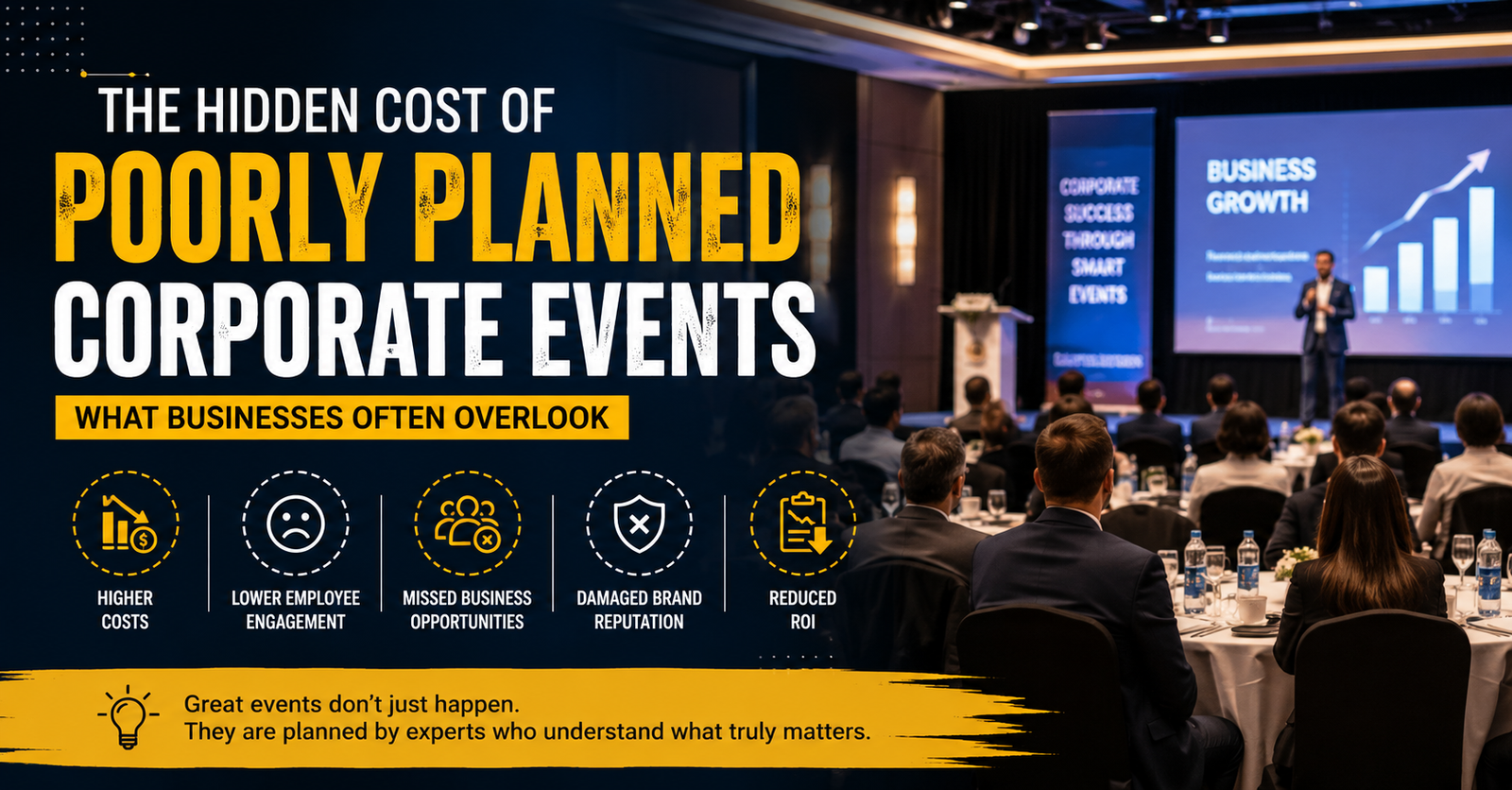
Why Corporate Events Fail is a question many businesses ask after investing significant time, effort, and resources into an event that fails to deliver expected results. Corporate events are powerful tools for strengthening business relationships, improving employee engagement, enhancing brand visibility, and driving organizational growth. However, many organizations focus only on visible event expenses such as venue bookings, catering, and logistics while overlooking the hidden costs that arise from poor planning and execution. A poorly organized corporate event can impact employee morale, client relationships, brand reputation, and overall business performance. Understanding these hidden costs can help organizations make informed decisions, improve event outcomes, and maximize the return on their event investments. Why Corporate Events Matter More Than Ever In today’s competitive business environment, corporate events have evolved beyond simple gatherings. They play a crucial role in helping organizations: Strengthen employee engagement and morale Build meaningful client relationships Increase brand awareness Generate business opportunities Enhance company culture Encourage collaboration and innovation When planned strategically, corporate events create measurable business value. However, poor planning can significantly reduce their effectiveness. The 7 Hidden Costs of Poorly Planned Corporate Events 1. Damage to Brand Reputation Every corporate event reflects your organization’s professionalism and credibility. Issues such as registration delays, technical failures, poor venue management, or ineffective communication can create negative impressions among attendees. Clients, partners, and stakeholders often judge a company based on the quality of its events. A poorly managed event can damage brand perception and undermine years of reputation-building efforts. 2. Reduced Employee Engagement Corporate events are often designed to motivate employees, strengthen workplace culture, and improve team collaboration. However, poor planning can lead to frustration rather than engagement. Common issues include: Disorganized schedules Lack of interactive activities Poor communication Limited employee participation When employees leave an event feeling disengaged, the organization misses a valuable opportunity to improve morale and productivity. 3. Missed Business Opportunities Corporate events frequently serve as platforms for networking, lead generation, partnership development, and client relationship building. If attendees experience logistical challenges or a lack of organization, valuable business opportunities can be lost. Potential clients may leave with a negative impression, reducing the event’s overall effectiveness. 4. Budget Overruns and Unexpected Expenses One of the most common hidden costs of poor event planning is uncontrolled spending. Without proper planning, businesses often encounter: Last-minute vendor charges Emergency equipment rentals Additional staffing expenses Transportation issues Overtime costs Professional planning helps businesses anticipate and manage these costs effectively. 5. Lower Event ROI Every corporate event should contribute toward specific business objectives. Whether the goal is lead generation, employee engagement, brand awareness, or client retention, success should be measurable. Poor planning often results in: Low attendance rates Reduced audience engagement Missed networking opportunities Failure to achieve business goals This significantly reduces the return on investment (ROI) of the event. 6. Increased Pressure on Internal Teams Many businesses rely on employees to manage events alongside their regular responsibilities. This often leads to: Reduced productivity Burnout Missed deadlines Higher workplace stress Internal teams may struggle to manage vendors, registrations, logistics, and attendee communication while maintaining their day-to-day responsibilities. 7. Poor Attendee Experience Attendee satisfaction is one of the strongest indicators of event success. Poor planning can create: Long waiting times Confusing schedules Technical disruptions Poor venue management Limited networking opportunities A negative attendee experience can reduce future participation and impact overall event outcomes. Comparison: Poorly Planned Events vs Professionally Managed Events Poorly Planned Event Professionally Managed Event Budget overruns Controlled spending Vendor coordination issues Seamless vendor management Low attendee engagement High attendee satisfaction Technical disruptions Contingency planning in place Reduced ROI Measurable business outcomes Negative brand perception Professional brand representation Real-World Scenario: The Cost of Poor Planning Imagine a company hosting its annual client appreciation event. Due to poor planning, attendee registration takes longer than expected, presentations begin late because of technical issues, and catering services are delayed. While these problems may seem minor individually, together they create a negative experience that affects client satisfaction, networking opportunities, and overall brand perception. The visible expenses remain the same, but the hidden costs can significantly impact future business relationships and event success. How Professional Event Management Reduces Risk Partnering with an experienced corporate event management company helps businesses avoid common planning challenges and improve event outcomes. Strategic Planning Clear timelines, objectives, and execution plans ensure events run smoothly. Vendor Management Professional planners coordinate venues, suppliers, technical teams, and service providers efficiently. Budget Control Experienced event managers help businesses maximize value while avoiding unnecessary expenses. Risk Management Contingency planning minimizes disruptions and ensures operational continuity. Enhanced Attendee Experience Professional execution creates memorable experiences that support business objectives. Frequently Asked Questions What is the biggest hidden cost of a poorly planned corporate event? Reputational damage is often the most significant hidden cost because it can affect employee morale, client relationships, and brand perception. How can businesses improve event ROI? Businesses can improve ROI by setting clear objectives, tracking performance metrics, engaging attendees effectively, and ensuring professional event execution. Why do corporate events fail? Corporate events commonly fail due to poor planning, lack of communication, unclear objectives, inadequate budgeting, and ineffective coordination. Should businesses hire a corporate event management company? For medium to large-scale events, professional event management can reduce risk, improve attendee experiences, and help achieve measurable business outcomes. Related Articles How to Choose the Right Event Management Company in Pune Corporate Event Planning Checklist for Businesses in Pune Corporate Event Management Company vs In-House Event Planning: Which Is Better? 7 Corporate Events Every Growing Business in Pune Should Organize for Long-Term Success Conclusion Corporate events represent significant investments of time, resources, and effort. While visible event expenses are easy to identify, the hidden costs of poor planning can have a much greater impact on business performance. From damaged brand reputation and reduced employee engagement to missed business opportunities and lower event ROI, poor event execution can create long-term challenges. By investing in strategic planning and professional event management, businesses can deliver successful corporate events that create

Planning an event — whether it’s a grand wedding, a high-profile corporate conference, or an exciting product launch — is no small task. With countless details to manage and high expectations to meet, hiring the right event management company in Pune can be the deciding factor between a mediocre gathering and a truly memorable experience. But with so many agencies operating across the city, making the right choice can feel overwhelming. Here’s a straightforward guide to help you navigate the decision with confidence. Start by Defining Your Event Requirements The first step before approaching any agency is to have a clear picture of what you need. What type of event are you hosting? How many guests will attend? What is your budget range? What mood or theme do you want to create? Having answers to these questions ready will help any professional agency understand your expectations and craft a proposal that genuinely aligns with your goals — rather than pushing a one-size-fits-all package. Prioritise Relevant Industry Experience Experience matters, but relevant experience matters even more. A company that specialises in weddings may not have the expertise or infrastructure to execute a large-scale business conference with precision. If you are organising a business event, it is important to look specifically for a corporate event management company in Pune that has hands-on experience managing conferences, seminars, award nights, team-building retreats, annual gatherings, or product launches. Always ask for their portfolio, review past projects, and evaluate the scale and variety of events they have handled. The right experience will reflect directly in the quality of planning and on-ground execution. Assess Their Creative Approach A truly great event leaves a lasting impression, and that requires creativity. During your first interaction with an agency, pay attention to whether they ask thoughtful questions about your vision or simply walk you through pre-packaged options. The best companies take time to understand your brand identity, your audience, and the story you want your event to tell. Look for a team that brings fresh, customised ideas to the table — from innovative décor concepts and thematic lighting to curated entertainment and personalised guest experiences. Creativity combined with execution capability is what separates outstanding event companies from average ones. Examine Their Vendor Partnerships No event company works alone. Behind every well-executed event is a reliable network of caterers, AV specialists, decorators, photographers, security personnel, and logistics teams. An experienced event management company in Pune will have established, long-term relationships with trusted vendors — which translates to smoother coordination, better pricing, and fewer last-minute complications for you. During your consultation, ask about the vendors they regularly work with and how they handle vendor-related issues on the day of the event. A weak vendor ecosystem is a warning sign you should not ignore. Evaluate Communication and Project Management Event planning is deeply time-sensitive, and poor communication can snowball into serious problems. From your very first interaction, observe how organised and responsive the team is. Do they reply to queries promptly? Do they offer a single point of contact or a dedicated event coordinator? Do they work with structured timelines and checklists? A reliable corporate event management company in Pune will keep you informed at every stage of the planning process, address concerns proactively, and ensure nothing falls through the cracks as the event date approaches. Verify Reviews and Client References Before making a final decision, take the time to read online reviews and speak with past clients if possible. Real feedback from people who have worked with the company will give you a far more accurate picture than any sales pitch. Look for consistency in positive feedback around areas like reliability, creativity, problem-solving, and professionalism. If an agency is hesitant to share references, consider that a red flag. Reputable companies are proud of their track record and happy to connect you with satisfied clients. Insist on Transparent and Detailed Pricing Budget overruns are one of the most common complaints in event planning. To avoid unpleasant surprises, always request a fully itemised quote before signing any agreement. Understand clearly what is included in the package and what will be charged additionally. A trustworthy event management company in Pune will be completely upfront about costs and will work collaboratively with you to optimise the budget without sacrificing the overall experience. Frequently Asked Questions (FAQs) Q1. What services does an event management company in Pune offer? A full-service event management company in Pune typically handles concept development, venue sourcing, vendor coordination, décor and theming, logistics, on-site management, and post-event support. The goal is to take the entire planning burden off the client and ensure flawless execution from start to finish. Q2. How far in advance should I book a corporate event management company in Pune? For mid-sized events, it is advisable to book a corporate event management company in Pune at least 4 to 8 weeks in advance. For large-scale events such as annual conferences, product launches, or award ceremonies, booking 3 to 6 months ahead is recommended to secure the best venues, vendors, and creative planning time. Q3. How much does hiring an event management company in Pune cost? Pricing depends on the type of event, guest count, venue, and scope of services. Costs can range from ₹50,000 for smaller events to several lakhs for large corporate productions. Most reputable agencies offer flexible packages and will provide a detailed quote based on your specific requirements. Q4. Can event companies manage virtual and hybrid events? Yes. Most modern corporate event management companies in Pune are fully equipped to handle virtual, hybrid, and in-person events. This includes live streaming, virtual audience engagement, digital platform integration, and seamless coordination between online and offline attendees. Q5. What key questions should I ask an event management company before hiring? Ask about their experience with similar events, their team size, vendor network, contingency planning for emergencies, whether a dedicated coordinator will be assigned, and whether their pricing is fully transparent with no hidden charges. Requesting client references is also